The UK Graduate Route drops to 18 months in 2027
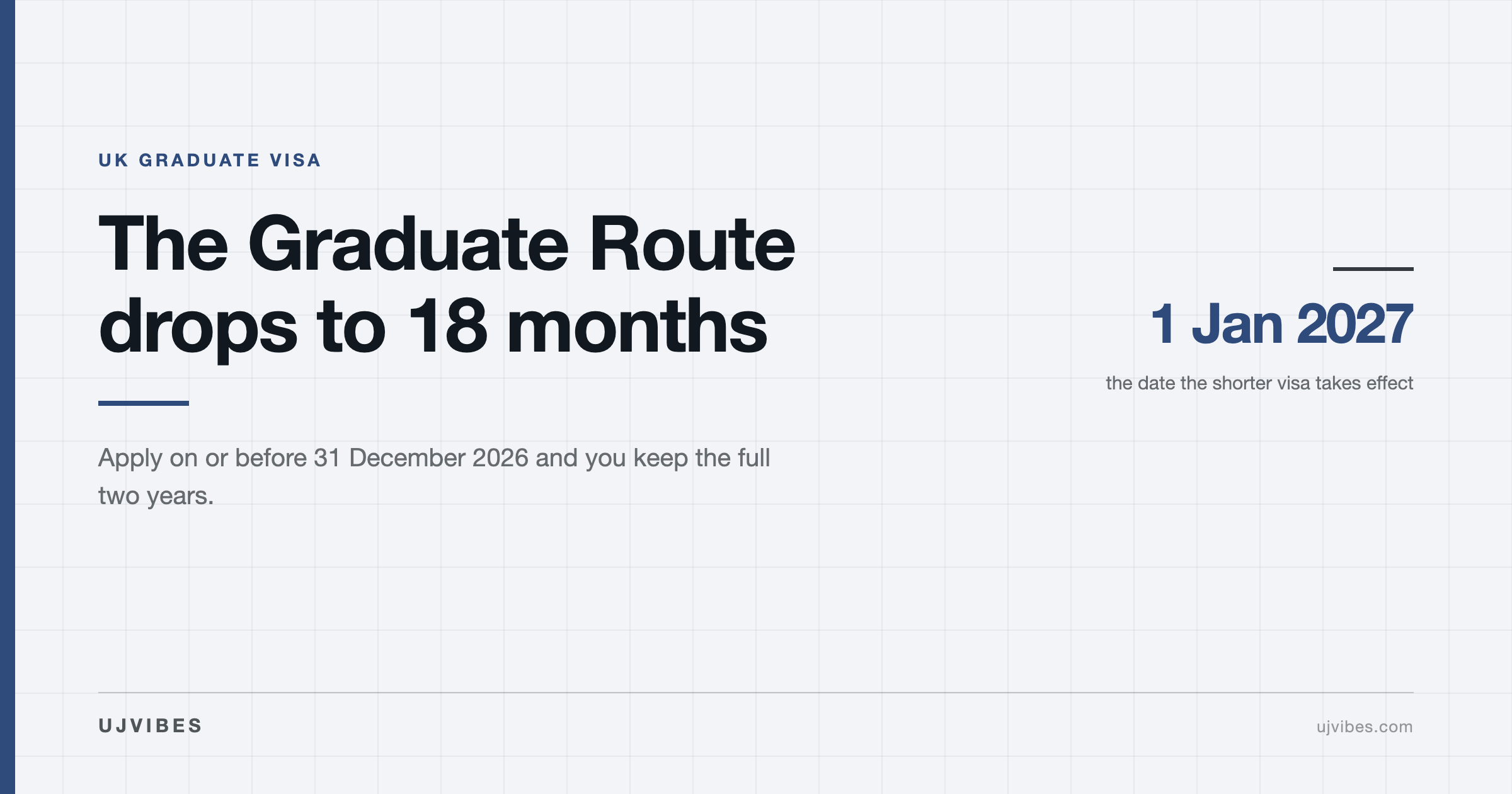
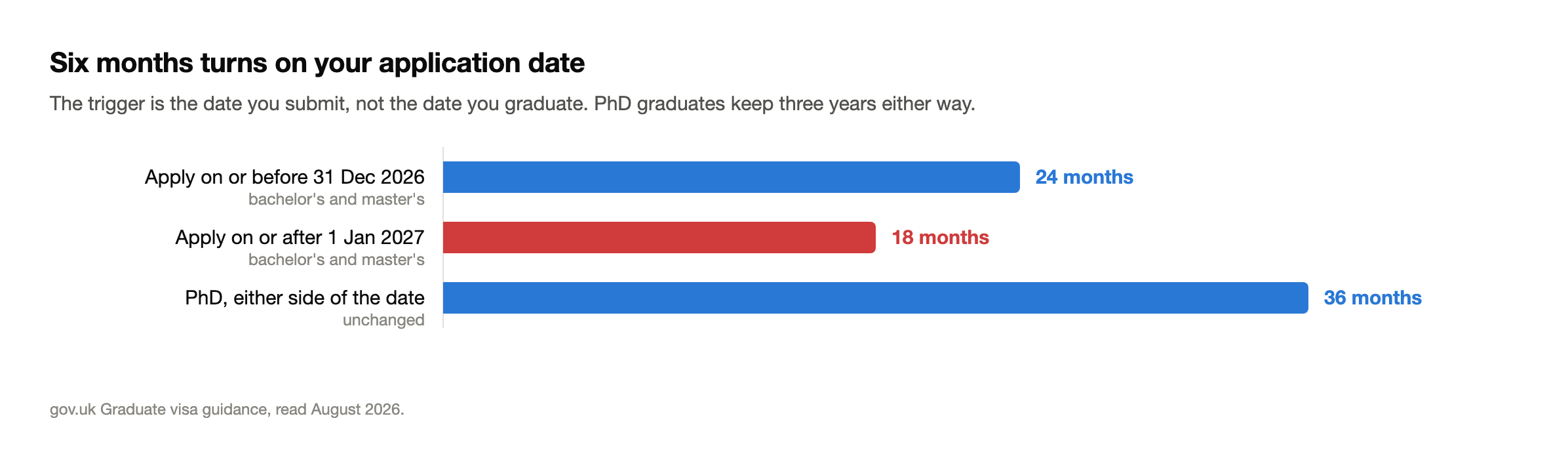
The UK Graduate visa gives you two years if you apply on or before 31 December 2026, and 18 months if you apply on or after 1 January 2027.
PhD graduates keep three years either way. That is a six-month difference decided by your application date, and six months is often the gap between converting to a Skilled Worker visa and having to leave.
Here is who the deadline affects, what the visa costs, and what to do if you are studying now.
What changes on 1 January 2027
The length of the Graduate visa for bachelor’s and master’s graduates falls from two years to 18 months. Nothing else about the route changes: no sponsor is required, you can work in most jobs, and you can look for work while on it.
| Your qualification | Apply on or before 31 Dec 2026 | Apply on or after 1 Jan 2027 |
|---|---|---|
| Bachelor’s degree | 2 years | 18 months |
| Master’s degree | 2 years | 18 months |
| PhD or doctorate | 3 years | 3 years, unchanged |
Read that last line carefully. The trigger is your application date.
Who does the deadline actually affect?
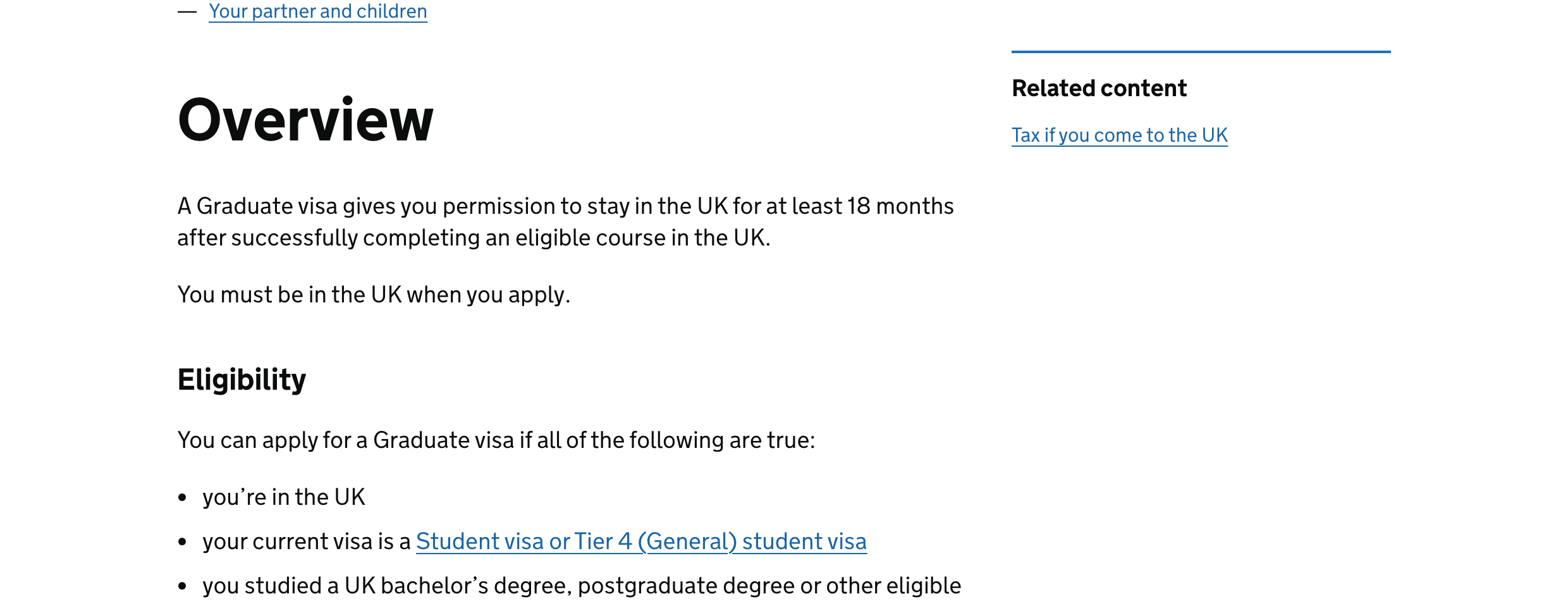
Anyone whose course finishes late enough that they cannot apply before the end of 2026. You must be in the UK and hold a Student or Tier 4 visa when you apply, and your university has to confirm you completed the course.
- Finishing a one-year master’s in autumn 2026: you should comfortably apply before 31 December 2026 and get two years. Do not delay.
- Starting a January 2026 master’s: your course likely finishes in early 2027, which puts you on the 18-month version. Plan for it rather than being surprised.
- Finishing an undergraduate degree in summer 2027 or later: 18 months is your baseline. Build the job search into your final year.
- Doing a PhD: unaffected. You keep three years.
You cannot apply before your university confirms completion, so this is not something you can simply choose to do early. If your completion confirmation is the bottleneck, ask your department in advance exactly when it is issued.
The cost, both versions compared
The application fee is £937, and the immigration health surcharge is usually £1,035 for each year you will be in the UK. Those are the two unavoidable costs, and the surcharge is the larger one.
| Cost | Two-year version | 18-month version |
|---|---|---|
| Application fee | £937 | £937 |
| Immigration health surcharge | About £2,070 for two years | About £1,553 for 18 months |
| Approximate total | About £3,007 | About £2,490 |
The shorter visa costs less, which is worth naming honestly. But you are paying roughly £500 less for six months less permission, so on a per-month basis the two-year version is better value as well as more useful.
Why does six months matter so much?
Because the Graduate visa cannot be extended. It is a one-time window to find a sponsored role, and when it ends you either have a Skilled Worker visa or you leave.
An 18-month visa realistically gives you 12 to 14 months of job searching. A sponsored offer takes time to convert into a visa. Employers have to hold a sponsor licence and assign a Certificate of Sponsorship. The role also has to meet the salary and skill thresholds.
Those thresholds are the real constraint. The Skilled Worker general salary threshold is £41,700 a year, or the going rate for the occupation, whichever is higher. The skill level is degree level. A new entrant rate of £33,400 applies if you are under 26 or graduated within the last two years. That is exactly the position most Graduate visa holders are in.
So the practical sequence is: use the Graduate visa to find a degree-level role paying at least the new entrant rate, with an employer that holds a licence. Not any job. That specific kind of job.
Five things to do before the deadline
Work backward from your completion date, and treat the job search as starting before you graduate rather than after.
- Find out from your department the exact date it confirms course completion to the Home Office. That date sets your earliest application.
- If that date falls before 31 December 2026, apply as soon as you can and secure the two years.
- Budget £937 plus the surcharge now, so the fee is not the reason you apply late.
- Check employers against the UK’s public register of licensed sponsors before applying. An employer without a licence cannot sponsor you, however much it wants to.
- Target roles at or above £33,400 if you qualify as a new entrant, and check the going rate for the specific occupation code, which can be higher.
One route to rule out early: UK care work. Overseas recruitment for care workers closed on 22 July 2025. It is no longer the fallback it once was. Our guide to what happened to UK care worker sponsorship covers what is still open.
Frequently asked questions
These are the questions students ask most often about the Graduate Route, with the deadline that decides how long yours lasts.
How long is the UK Graduate visa now?
Two years for bachelor’s and master’s graduates applying on or before 31 December 2026, and 18 months for applications on or after 1 January 2027. PhD graduates get three years in both cases.
Do I need a job offer for the Graduate visa?
No. No job offer and no sponsor are required, and you can work in most jobs or look for work. That is what makes it the most useful visa in the UK system for a recent graduate.
Can I extend the Graduate visa?
No. It is a single fixed period. You have to switch to another route, usually Skilled Worker, before it expires.
What does the Graduate visa cost?
£937 for the application, plus the immigration health surcharge at usually £1,035 per year of leave. Expect roughly £3,000 all in for the two-year version.
Does the change apply to when I graduate or when I apply?
When you apply. Applications submitted on or before 31 December 2026 get two years regardless of graduation date, so submitting before the deadline is what matters.
Can I apply for the Graduate visa from outside the UK?
No. You must be in the UK and hold a Student or Tier 4 visa when you apply, and your education provider must confirm you completed the course.
Is 18 months enough to find a sponsored job?
It can be, but it compresses the window to roughly 12 to 14 months of searching once you allow for conversion time. Start before you graduate and target licensed sponsors specifically.
If the UK route looks tight, the closest comparison is Canada’s post-graduation work permit, which now has its own language and field-of-study conditions. Our Canadian study permit guide covers what it takes to get there, and the permanent residency routes show where it leads.
Ask your department this week when it confirms your course completion. If that date is before 31 December 2026, apply immediately and keep the extra six months.